
Patterns & Syllabus
What is a Pattern (Tul)?
A pattern is a set of fundamental movements, mainly defence and attack, set in a logical sequence to deal with one or more imaginary opponents. Patterns are an indication of a student's progress a barometer in evaluating an individual's technique.
Why do we perform Patterns?
We practise patterns to Improve our Tae Kwon-Do techniques, to develop sparring techniques, to improve flexibility of movement, master body-shifting, develop muscles, balance and breath control. They also enable us to acquire techniques which cannot be obtained from other forms of training.
Why are there twenty four Patterns?
The reason for twenty four patterns in Tae Kwon-Do is because the founder, Major General Choi Hong Hi, compared the life of man with a day in the life of the earth and believed that some people should strive to bequeath a good spiritual legacy to coming generations and in doing so gain immortality.
Therefore, if we can leave something behind for the welfare of mankind, maybe it will be the most important thing to happen in our lives, as the founder says:
"Here I leave Tae Kwon-Do for mankind. As a trace of a man of the late 20th Century. The twenty four patterns represent twenty four hours, one day or all of my life."
The following points should be considered when performing Patterns:
- Patterns should begin and end on the same spot. This will indicate the performers accuracy.
- Correct posture and facing must be maintained at all times.
- Muscles of the body should be tensed or relaxed at the proper critical moments in the exercise.
- The exercise should be performed in a rhythmic movement with the absence of stiffness.
- Each pattern should be accelerated or decelerated according to instructions.
- Each pattern should be perfected before moving to the next.
- Students should know the purpose of each movement.
- Students should perform each movement with realism.
 Yellow Tag |
CHON JI means literally "the Heaven the Earth". It is, in the Orient, interpreted as the creation of the world or the beginning of human history, therefore, it is the initial pattern played by the beginner. This pattern consists of two similar parts; one to represent the Heaven and the other the Earth. Watch Video Watch Video
|
|
 Yellow Belt |
DAN GUN is named after the Holy Dan Gun, the legendary founder of Korea in the year 2333 B.C.
Watch Video
|
|
 Green Tag |
DO SAN is the pseudonym of the patriot An Ch'ang-Ho (1876-1938) who dedicated hi entire life to furthering the education of Korea and its independant movement.
Watch Video
|
|
 Green Belt |
WON HYO was the noted monk who introduced Buddhism into the Silla Dynasty in the year 686 A.D.
Watch Video
|
|
 Blue Tag |
YUL GOK is the pseudonym of the great philosopher and scholar "Yi I", (1536-1584) nicknamed the "Confucious of Korea". The 38 movements represent his birthplace on the 38th Parallel and the diagram represents "Scholar". "."."
Watch Video
|
|
 Blue Belt |
JOONG GUN is named after the patriot Ahn Joong-Gun who assassinated Hiro-Bumi Ito, the first Japanese governor general of Korea, known as the man who played the leading role in the Korea-Japan merger. The 32 movements of this pattern refer to Mr Ahn's age when he was executed in Lui-Shung prison in 1910.
Watch Video
|
|
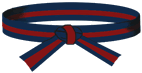 Red Tag |
TOI GYE is the pen name of the noted scholar Ti Hwang (16th Century A.D.), an authority on neo-confuscionism. The 37 movements of this pattern refer to his birthplace on the 37th parallel.
Watch Video
|
|
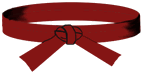 Red Belt |
HWA RANG is named after the Hwa-Rang Youth Group which originated in the Silla Dynasty about 1350 years ago. This group eventually became the actual driving force for the unification of the three Kingdoms of Korea. The 29 movements refer to the 29th Infantry Division, where Tae Kwon-Do developed into maturity.
Watch Video
|
|
 Black Tag |
CHOONG MOO was the given name to the great Admiral YI SUN-SIN of the YI Dynasty. He was reputed to have invented the first armoured battleship (Kobukson), which was the precursor to the present day Submarine, in 1592 A.D. The reason why this pattern ends with a left hand attack is to symbolise his regrettable death, having no chance to show his unrestrained potentiality, checked by the forced reservation of his loyalty to the King.
Watch Video
|
|
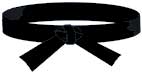 Black Belt |
